Red SUV
Nechol
Left an abusive boyfriend. Lived behind a grocery store for two years.
Lost touch
They're parked in grocery store lots across Houston, living in plain sight. We spent weeks finding them, and following what happened next.
Reporting by Pooja Lodhia and Francisco Barragan
One of these cars is someone’s home.
It is so many people right now in their cars living, like undercover though. Like, we all pass them every day and we’d never know it.
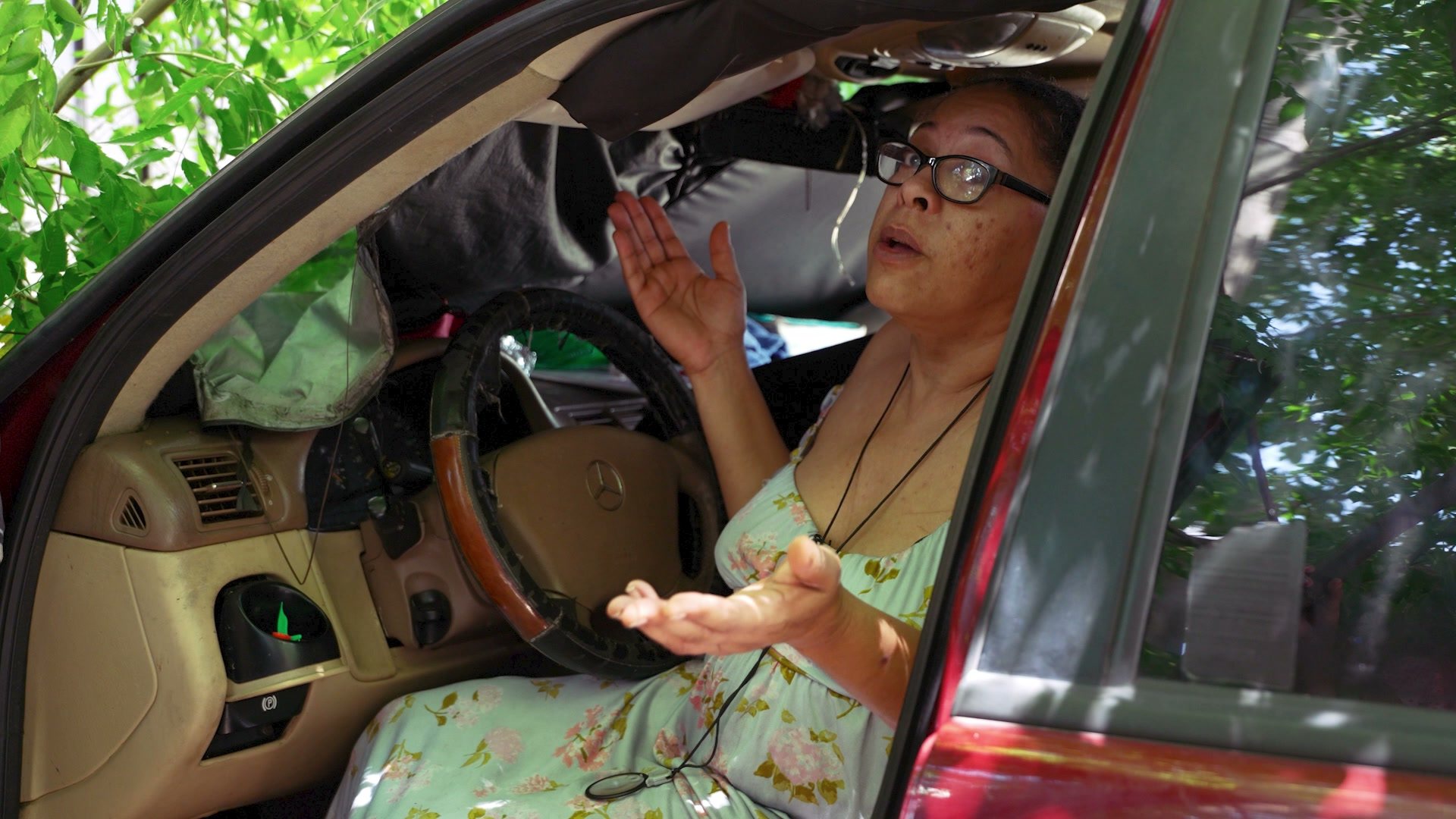
Nechol, who lived in her SUV for two years
There was something unsettling about the red SUV we saw parked behind our usual grocery store.
It was July in Houston, meaning, it was somewhere around 100 degrees, with the kind of humidity that makes you feel like your clothes are stuck to your skin.
The SUV was parked in the shade, with the door wide open.
You could tell it was filled with stuff, but not necessarily the kind of stuff you usually keep in your car.
We awkwardly walked up to the car, but the woman inside who immediately greeted us was the opposite of awkward.
She was energetic. Talkative. Funny.
More than anything, she seemed comfortable.
She told us she had been living in her red SUV for the past two years.
As most journalists know, it can be difficult to convince homeless people to talk to us, much less go on camera. Their families often don’t know how bad their situations are, and to be honest, most people don’t look their best when they’re living on the street.
But Nechol wanted to talk on camera.
“Just a person, trying to survive this game of life just like anybody else. Same way y’all get up and come to work and have to do stories and this and that. Same way I wake up and try to figure out how I’m going to survive every day,” she said. “We just be glad that when we get back home in the evening, thank you Lord, I survived another day.”
Nechol told us her boyfriend was physically abusive. She left their apartment two years ago and couldn’t afford to get her own.
She had been delivering groceries for DoorDash, but her SUV had recently broken down. So, for now, she was spending her days behind the grocery store, a spot she picked because it’s in what most would consider a safe area. She said the store manager let her stay because she didn’t cause any trouble.
“I’m at the precipice of having it all and not having anything at all.”
Precipice.
It felt like such an odd way of describing life behind a grocery store.
But, it also kind of made sense.
ABC13 - Francisco Barragan
Nechol isn’t homeless in the way we usually think about homelessness.
When it rains, she doesn’t have to get wet. She’s not sprawled out on a sidewalk, with a shopping cart filled with her precious few possessions.
But, then again, Nechol doesn’t get a hot shower whenever she wants it.
She can’t afford to keep her car running, so she’s usually sitting in the heat.
I’m not sure how she was able to afford all the food we could smell coming from the back seat of her car, but I do know she wasn’t able to refrigerate any of it.
“It is so many people right now in their cars living, like undercover though,” she told us. “Like, we all pass them every day and we’d never know it.”
That’s when I heard my colleague let out a long breath.
We got back in the car, promising to stop by again in a few days, and started googling.
“Does living in your car mean you’re homeless?” “Where do homeless people shower?” “How many people in Houston live in their cars?”
Picture Reliant Stadium during a football game.
Twice the number of people who can fit inside were temporarily homeless last year, according to Rice University’s Kinder Institute.
The research organization estimates around 141,400 people in Harris, Fort Bend, and Montgomery counties were living in someone else’s home, a hotel, a car, a tent, or a shelter at some point in 2025.
It takes two Reliant Stadiums to hold them all.
Source: Rice University's Kinder Institute
After some enthusiastic phone calls to our news managers (they sounded interested, but, in typical manager fashion, wanted us to finish the stories we were currently working on before starting new ones), and spending a couple of days telling anybody who would listen about who and what we had found, we found some time to go out searching.
We were looking for cars in busy parking lots, specifically those parked away from store entrances. We were looking for the cars that looked like they were stuffed with belongings.
We drove by grocery stores, Walmarts, Home Depots. We even tried 24 Hour Fitness gyms, because we figured people might be using the showers inside.
We drove around West University, Meyerland, the Galleria area, Downtown, Midtown.
About five hours later, we pulled into a grocery store parking lot in north Houston, a few miles from the airport.
There was a white Toyota Tacoma parked in the back of the lot, with what looked like tools and random items in the truck bed.
A dog sat in the passenger’s seat and the door was wide open.
We could barely make out who was inside. But, it looked like a man in his mid-30s or early 40s. He was shirtless and sweating.
It didn’t look like he was there to shop for groceries.
I walked up to him.
“Hi. I don’t want to bother you. I just saw you in the parking lot and I was wondering if you were living out of your car.”
He looked at me, looked at his dog, and looked down.
Then, he started talking.
He said he and his girlfriend had broken up, and he was trying to sell everything he owned on Facebook Marketplace so he could afford an apartment.
He didn’t want his family to know he didn’t have anywhere to live, so, instead of calling them, he was living out of his truck.
His name was Scott.
For about twenty minutes, Scott kept talking, telling me about how he used to work for Apple, how he used to have a collection of Oakley sunglasses, how he wasn’t supposed to be here, in a busy parking lot with a dog that was clearly overheating.
I didn’t ask a lot of questions, but Scott kept repeating, “I just want you to understand why I’m here.”
But, he refused to do an on-camera interview.
I called over my colleague, hoping he could convince him, but it wasn’t happening.
“If I put it on the record, it makes it real,” Scott told us.
Scott meant that literally. He wasn’t embarrassed. He wasn’t sad.
He just wasn’t ready to accept his reality, and we couldn’t argue with that.
We wished him well and drove away.

Twenty minutes later, we drove back to the parking lot where we found him.
Scott was gone.
We went back again a few days later, but we couldn’t find him.
ABC13 - Francisco Barragan
But, we kept thinking about what Nechol had told us.
“It is so many people right now in their cars living, like undercover though,” she said. “Like, we all pass them every day and we’d never know it.”
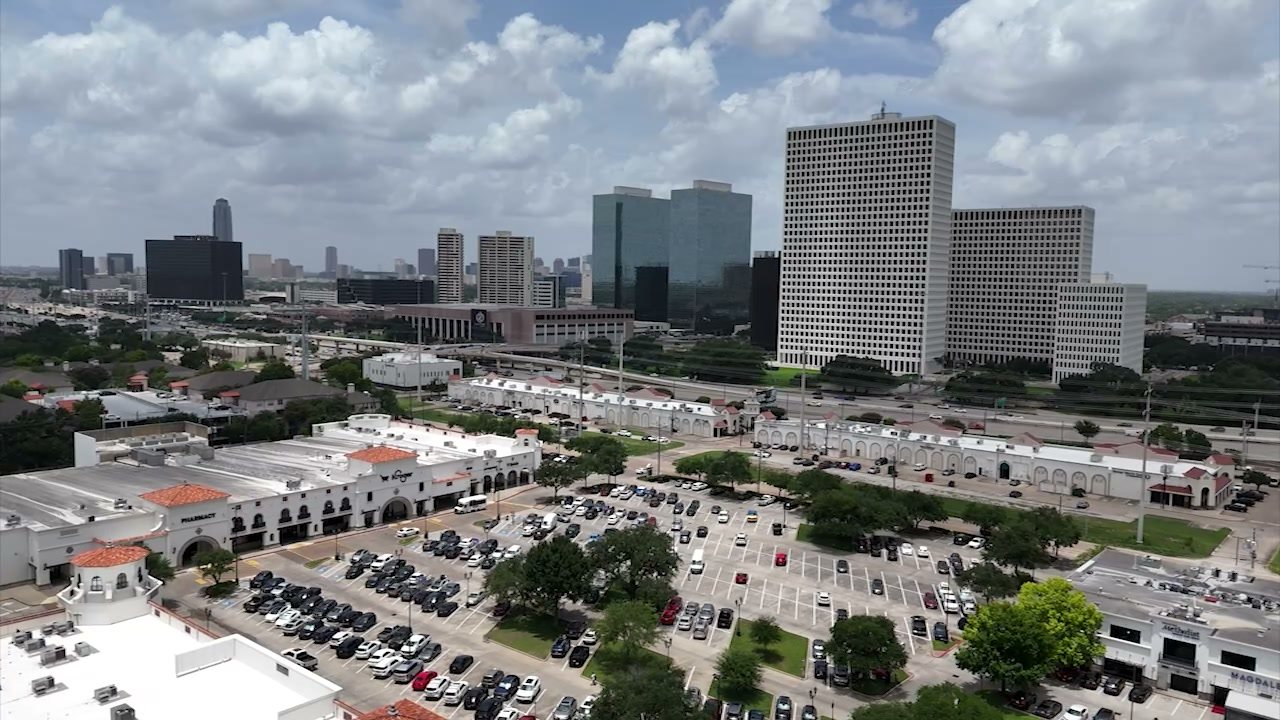
We drove around after work, before work, whenever we could find time, constantly thinking, "Where would we park if we were living out of our cars?"
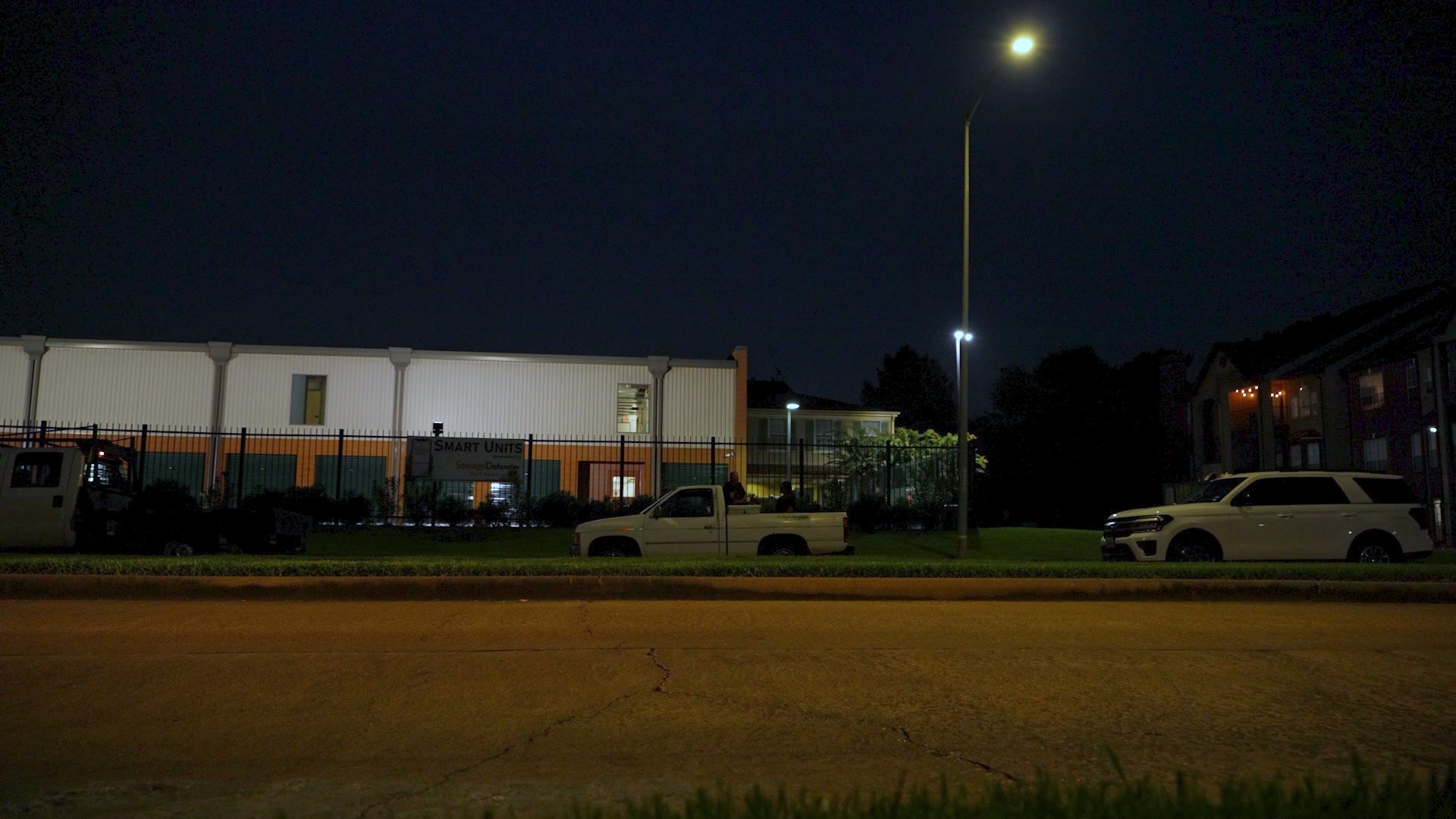
One day after work, about a week after we met Scott, we were about to give up for the evening when my colleague spotted a small white truck, parked under a streetlight, tucked between a Walmart and an apartment complex.
I knocked on the window, and we met Gary.
ABC13 - Francisco Barragan
Gary is 64 years old. He’s a four-time cancer survivor, and he had been living with his mother for years. But, when she died two months ago, he lost his home and didn’t know where else to go.
But, that doesn’t explain who he is.
Gary is, well, Gary. There’s no other way to describe him.
He’s the kind of person who makes those around him light up, even when he doesn’t make any sense, which is a lot of the time. He’s about six feet tall, weighs less than 100 pounds, and talks incessantly.
Gary slept in the cab of his truck, folding his long legs underneath him so he could fit. He likes music, boxing, and yoga, and, as he showed us, unprompted, about five minutes after we met, he is still flexible enough to put his feet behind his head.
When we asked him to share his story on camera, he jumped up and yelled, “I’m the correct candidate!” He repeated that about ten more times over the next half hour, while showing us the aluminum cans he collected to sell for change.
Gary had a working phone, so we exchanged phone numbers, and we went home. I was still smiling when he called around midnight to tell me that we were the only people to stop and talk to him that week.
According to the Coalition for the Homeless of Houston/Harris County (CFTH), about 50% of homelessness in Houston is caused by an economic crisis. That’s an unrelatable sounding phrase that means going through a relatable hard life event, like losing a job, having a family member die, or getting evicted.
I have a stable job and a savings account, but what would happen if I suddenly lost my job? How long would my savings last? Would I want to ask for help? What if my immediate family died or were unable to support me? What if I had a medical emergency I needed to pay for?
Maybe the thing about homelessness isn’t that it is unrelatable, it’s that we want it to be unrelatable.
And, if you’re like me, you might have had some misconceptions about how and why people end up homeless.
What share of homelessness in the Houston area is caused by substance abuse?
According to the Kinder Institute, about 10% of residents in Fort Bend, Harris, and Montgomery Counties reported moving in the past year because they felt they could no longer afford to live in their homes. Last year, Harris County saw its largest homeownership decline in 15 years, losing about 19,000 homes.
The same study shows three in five Houston households rent, and more than half of renters spend more than 30% of their income on rent.
“Life can just change so quickly and we don’t realize it until we’re in the midst of it,” Khena Minor told us, while leading us down a steep embankment off I-10, where people had set up a camp. “We’re like ‘Oh crap, things were sunshine and rainbows yesterday and now it’s just a hurricane and I can’t swim.’”
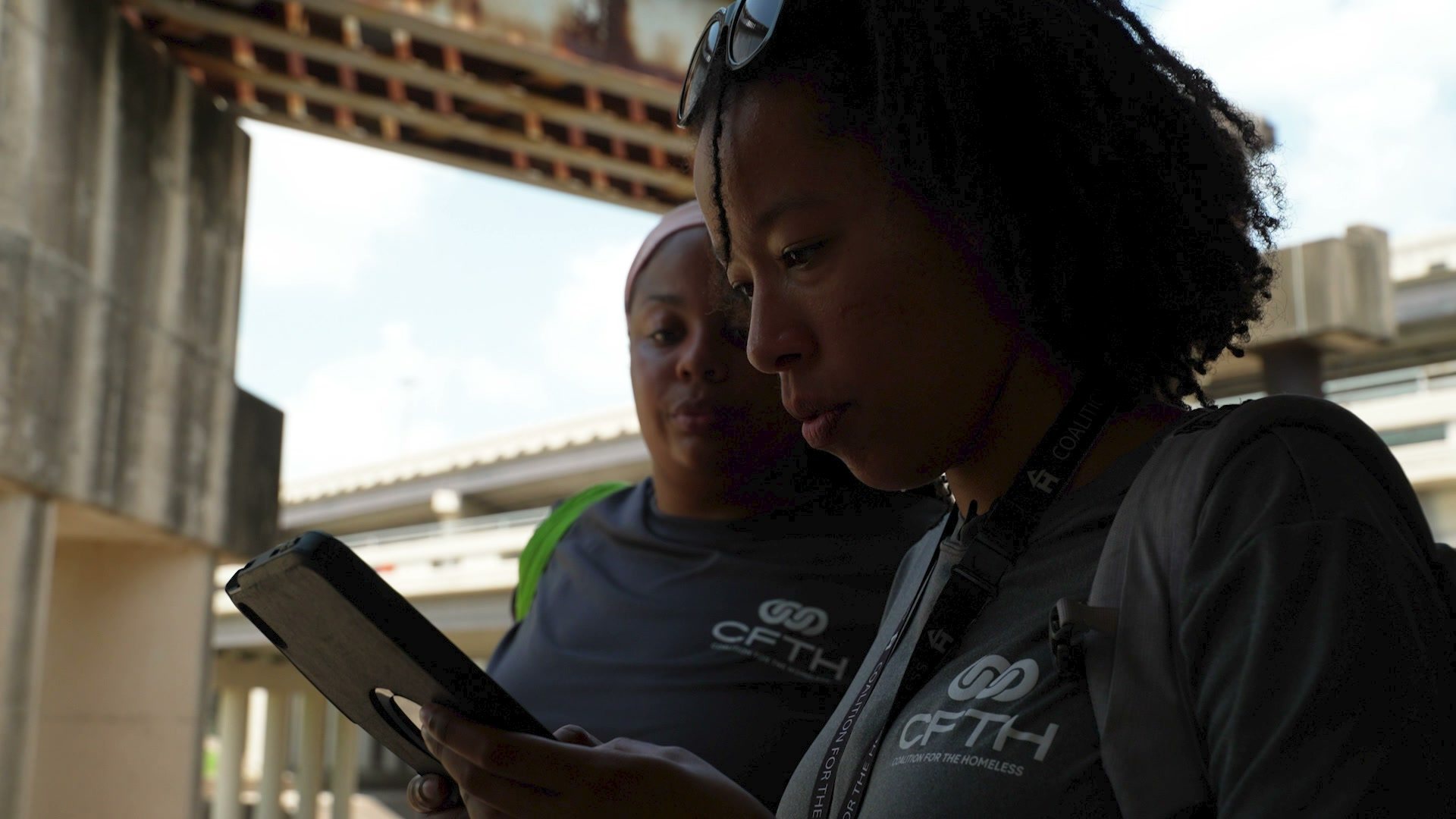
Khena is an outreach associate at CFTH. She’s also a licensed master social worker, and the type of quiet, non-judgmental listener who makes you feel like you want to spill your secrets.
“People should care because it could be any of us. People lose their families, their support systems, they get sick. Anything could happen and have a trickle effect, and anybody could end up in this scenario. That’s just the reality of it,” she explained.
We had called Khena after meeting Gary. We weren’t sure what CFTH could do to help him, but we felt like, even if we couldn’t change his situation, we should get information on what resources are available. We didn’t know what kind of story we’d be putting together, but we knew we needed to be better informed.
So, we met up with Khena in a parking lot downtown. She and her team followed us to where we had met Gary. I had talked to him the day before, but when we tried to call him that day, we realized his phone had been shut off.
Together, we drove around the area where we had last seen him, looking intently for him. We couldn’t find him anywhere.
We were frustrated, but Khena didn’t seem surprised.
We still had most of the day cleared, so the group took us to a homeless camp off I-10, where we saw dozens of people living under an overpass. A couple of them were happy to see us, but others were upset, yelling at us for bothering them.
I get it. I wouldn’t want a couple of strangers showing up to my home with a camera, especially if my home wasn’t one I was proud of.
Then, Khena took us to meet Manny and Sarah.
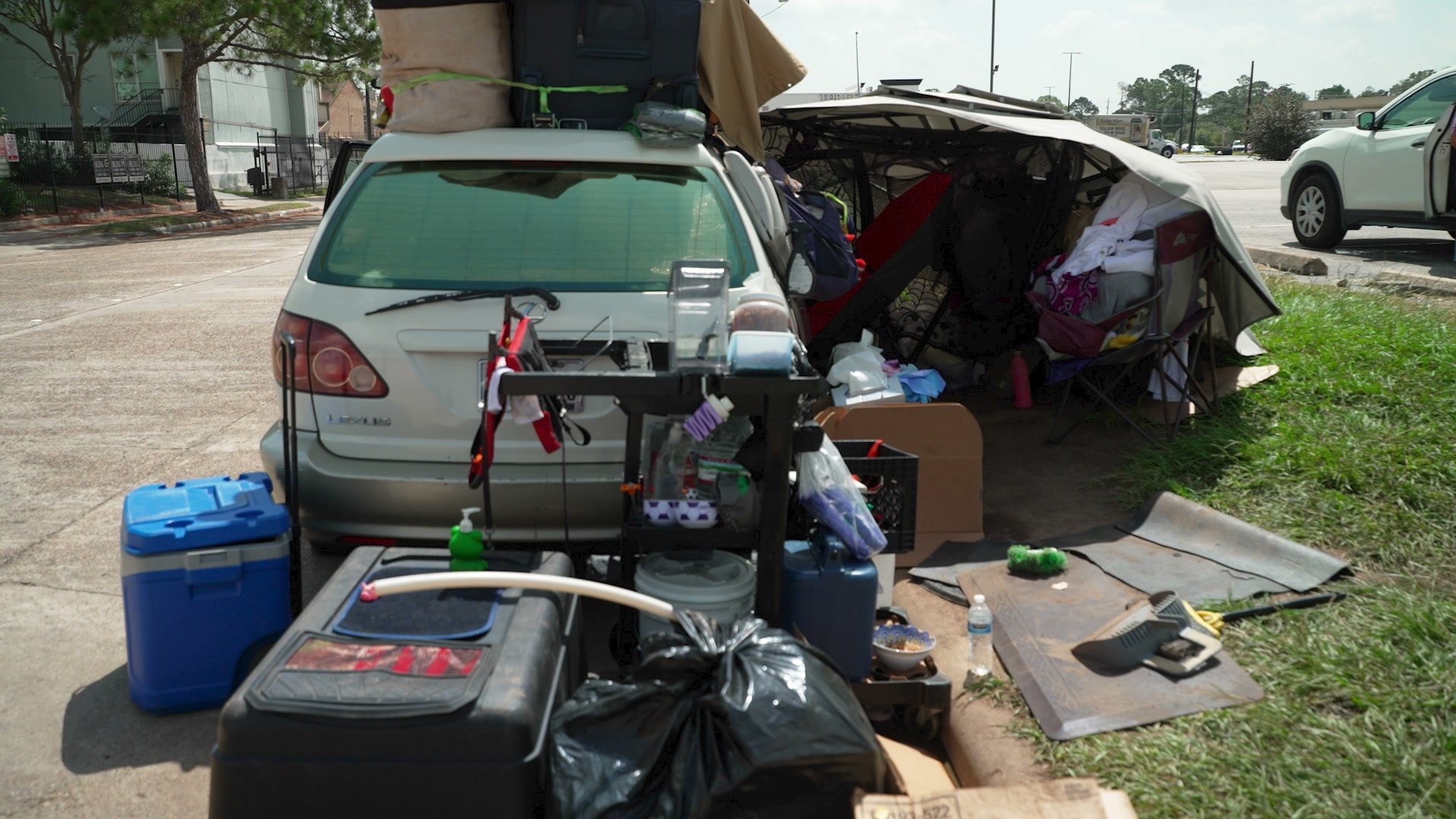
Tiny and muscular, Sarah had her blonde hair in two buns. Her clear blue eyes sparkled as Khena approached.
Sarah's partner of more than ten years, Manny, was sitting in the back seat of their car, trying to doze off. He had been bitten by a brown recluse spider and could barely move his leg.
“It snowballed to a way that I was like, ‘how bad can it get?’” Sarah asked.
Sarah worked as a waitress until she dislocated her hip about a year and a half ago, putting her in a painful cycle. Every shift she missed cost her money, but every shift she worked made her injury worse. Eventually, her boss cut her hours completely.
“Nobody likes a limping waitress. That makes them feel bad,” she explained.
Right around the same time Sarah lost her job, Manny got laid off from his job at a grocery store.
After several missed rent payments, the couple moved into their car with their cats.
They put most of their belongings in a storage unit, but, after a few months, they couldn’t afford rent on that, either.
Late fees started adding up, and soon enough, their belongings were seized and auctioned off.
Sarah and Manny didn’t realize it at the time, but their birth certificates and social security cards were in the storage unit.
Without documents, they couldn’t find another place to live. And they couldn’t apply for jobs or any kind of public assistance, either.
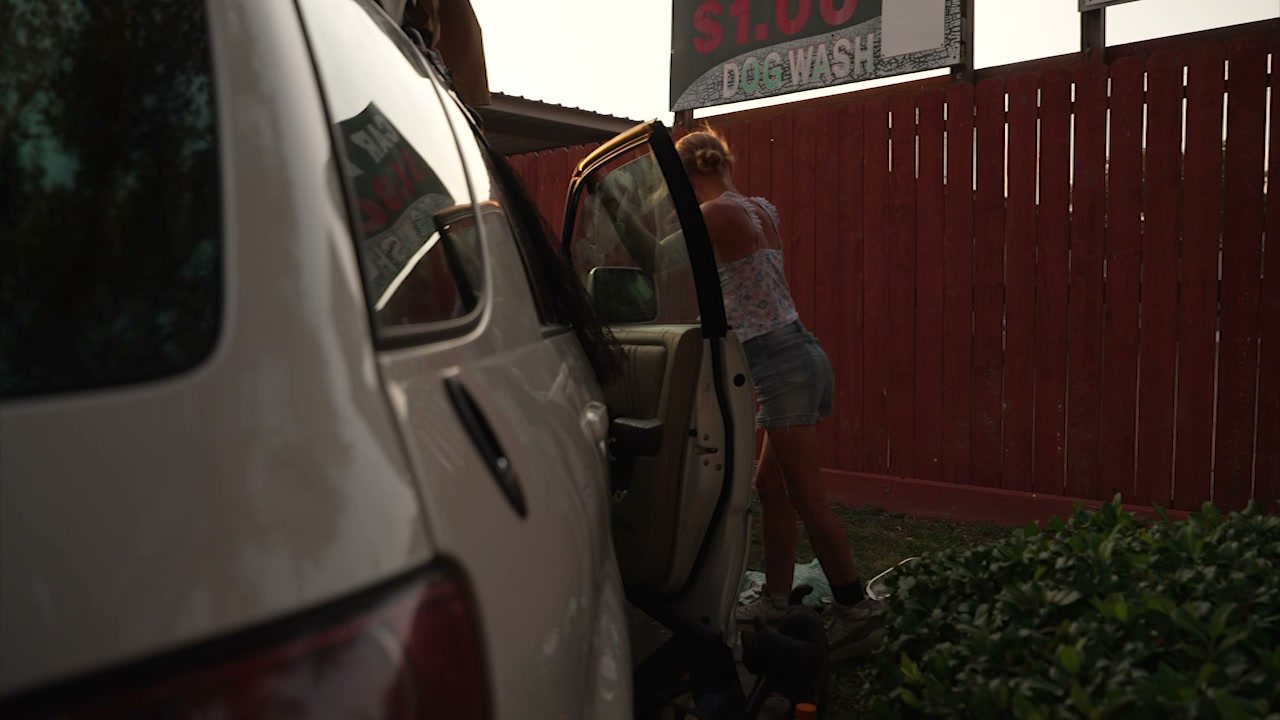
So, the couple stayed in their car, usually parked near their old apartment.
Sarah sometimes washed her hair at a nearby car wash.
Neighbors often stopped by, giving them whatever food and money they could spare.
“The kindness of strangers means a lot to us, but I do feel bad,” Sarah said. “You know, I’ve worked hard for my money. I do understand they’re like, ‘Why should I give? I’ve worked for my money, that’s my money.’ I understand.”
By the time we met Sarah and Manny, they had been in their car for a year.
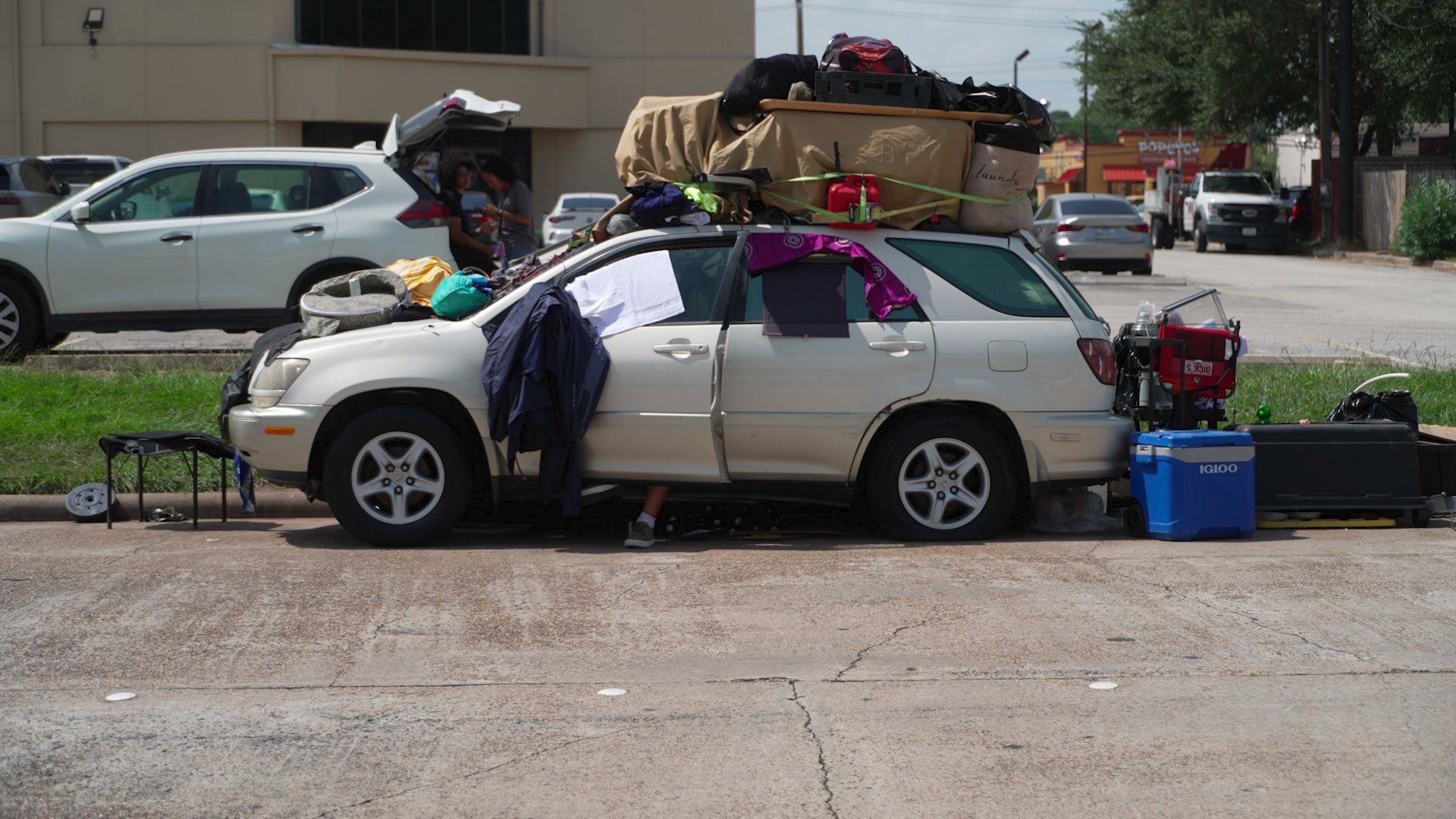
While we were talking to them, a neighbor pulled up and told us she was calling the police. She was angry, both at Sarah and Manny and at her other neighbors.
She told us, “It’s like, people are giving me things for free, why should I go out and hustle? We have had meetings.”
I obviously have empathy for Sarah and Manny and their situation.
But I also understand what the neighbor was talking about.
I probably wouldn’t want a broken-down car, with belongings and cats spilling out of it, parked in front of my house.
Would you?
One especially frustrated but also compassionate neighbor reported the situation to a city outreach team months ago.
And that’s how Sarah and Manny were referred to Khena.
CFTH is an umbrella organization that teams up local, state, and federal agencies with nonprofits to provide services. Its website describes the nonprofit like this: “CFTH is like air traffic control for the homeless response system, while the service providers are like the airlines.”
So, when Sarah and Manny met Khena, they were also introduced to a case worker with The Beacon, a local nonprofit that provides daily services like food and showers, along with legal aid and housing placement.
The organizations operate under a model called “Housing First.” That means getting people housing before addressing other problems they face, like disabilities, mental illness, or substance abuse. The idea is that it’s easier for people to get better in a comfortable home, rather than while sweating in a hot car, trying to avoid police officers and angry neighbors.
According to the CFTH, about 50% of those who seek help from the agency end up finding housing on their own. Of the half that remains, the agency estimates workers can resolve homelessness for 60% with a simple fix, like a month of free rent or basic help accessing documentation. 40% of them require a traditional housing solution, like long-term rent-free housing.
For months, Sarah and Manny have been on The Beacon’s waiting list for rapid rehousing.
“They’re willing to work, they’re able to work. They just need help getting out of this situation and transitioning back into stable life,” Khena explained.
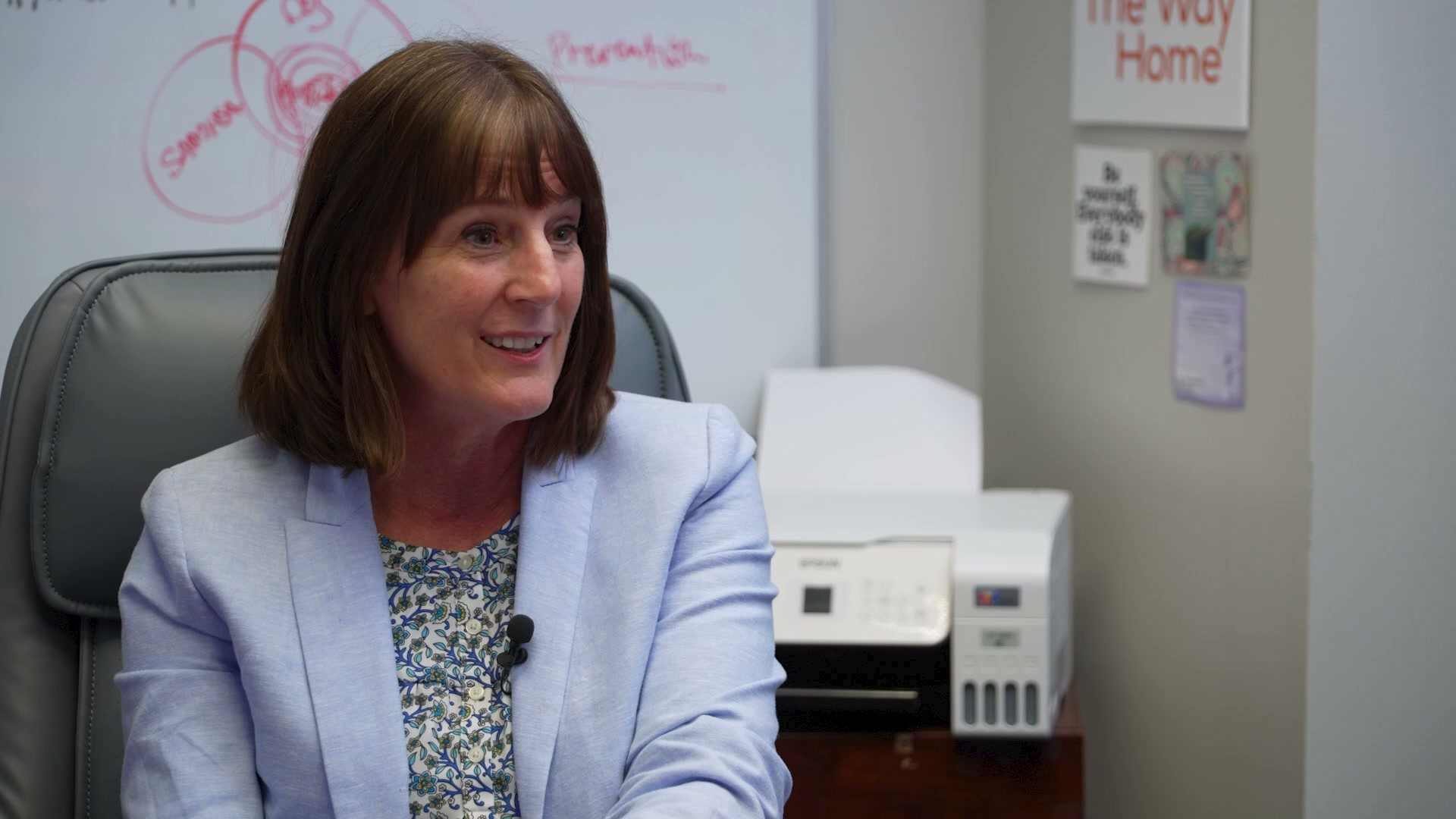
After meeting Khena, we called the CFTH and asked for an interview with Kelly Young, the group’s CEO.
She’s the woman who oversees how Harris County, Montgomery County, Fort Bend County and the city of Houston respond to homelessness. She works with more than 100 organizations to make that happen.
Kelly told us temporarily homeless people are often her biggest challenge.
“We know that our rents have gone up and typically your paycheck hasn’t. It doesn’t typically match. Once that happens, you start to see people step down, so now all of a sudden they are staying at other people’s houses. That’s good for a while, but it doesn’t always last. Then they lose their jobs because they’re not able to be there consistently, and what they have left is their asset, which is their car,” she explained. “Somebody without a disability or who hasn’t been out on the street for a long time, we can assess them and say, ‘You know, you may need housing, but there’s a priority list of a thousand people before you that are more vulnerable and have more issues than you do and they’re waiting for the next available housing intervention.’”
Kelly knew about Sarah and Manny, and, when we told her about Nechol and Gary, she nodded, calling them “the group right on the edge.”
“We tend to not want to help this group because this feels like it’s an endless bottomless pit. But, the truth of the matter is that if you gave three months’ worth of rent, you may not see that person for a year,” Kelly explained. “We act like helping people in that way won’t motivate them or somehow create some, ‘they didn’t pull themselves up by their bootstraps.’ It’s like well, great, happy that they can and most people would, but they’re really just needing just a little bit of extra something to get over that hump.”
Sarah and Manny, we learned, were getting help.
Their time on the waiting list was over.
“There were issues with the neighborhood wanting them to leave. They connected with outreach and it was just their turn. There was an open housing referral available,” said Ana Rausch, the CEO of The Beacon.
We reached out to Ana after finding out Sarah and Manny were getting housing.
We had lots of questions about what this opportunity would look like.
She said Sarah and Manny would sign a yearlong lease. For the first three months, they wouldn’t pay any rent. For nine months after that, they would be required to pay a portion of rent, which may increase as their financial situation improves. They would receive financial counseling for the next year.
It’s an incredible chance for the couple, but, we could tell right away, getting to the apartment wasn’t going to be easy.
At this point, Manny was barely able to walk.
“I need to go to the hospital, but I’m being stupid. It feels like I got shot. It really feels like I got shot,” Manny said. “The pain goes all the way straight through.”
They don’t let you forget that you’re homeless, that’s for sure.
Manny
Police were getting pushier, now writing tickets that the couple was never going to be able to pay.
“We’re like, ‘Hey, just bear with us, we’re just here a little bit longer. Like, this isn’t our dream situation. We’re tired of your face, you’re tired of our face.’ I get it. The feeling is mutual,” Sarah said.
“You’re still a person, but society doesn’t see you as one. It kind of goes out of its way to make sure you know that you’re not a person,” Manny said. “You know something is definitely off with you. They don’t let you forget that you’re homeless, that’s for sure.”
“You’re still a person, but society doesn’t see you as one. It kind of goes out of its way to make sure you know that you’re not a person,” Manny said. “You know something is definitely off with you. They don’t let you forget that you’re homeless, that’s for sure.”
The couple doesn’t have a working phone. They have a laptop, but finding internet access can be difficult.
But, we didn’t want to lose them.
I went out of town on a planned family vacation, so my colleague checked in on Sarah and Manny daily.
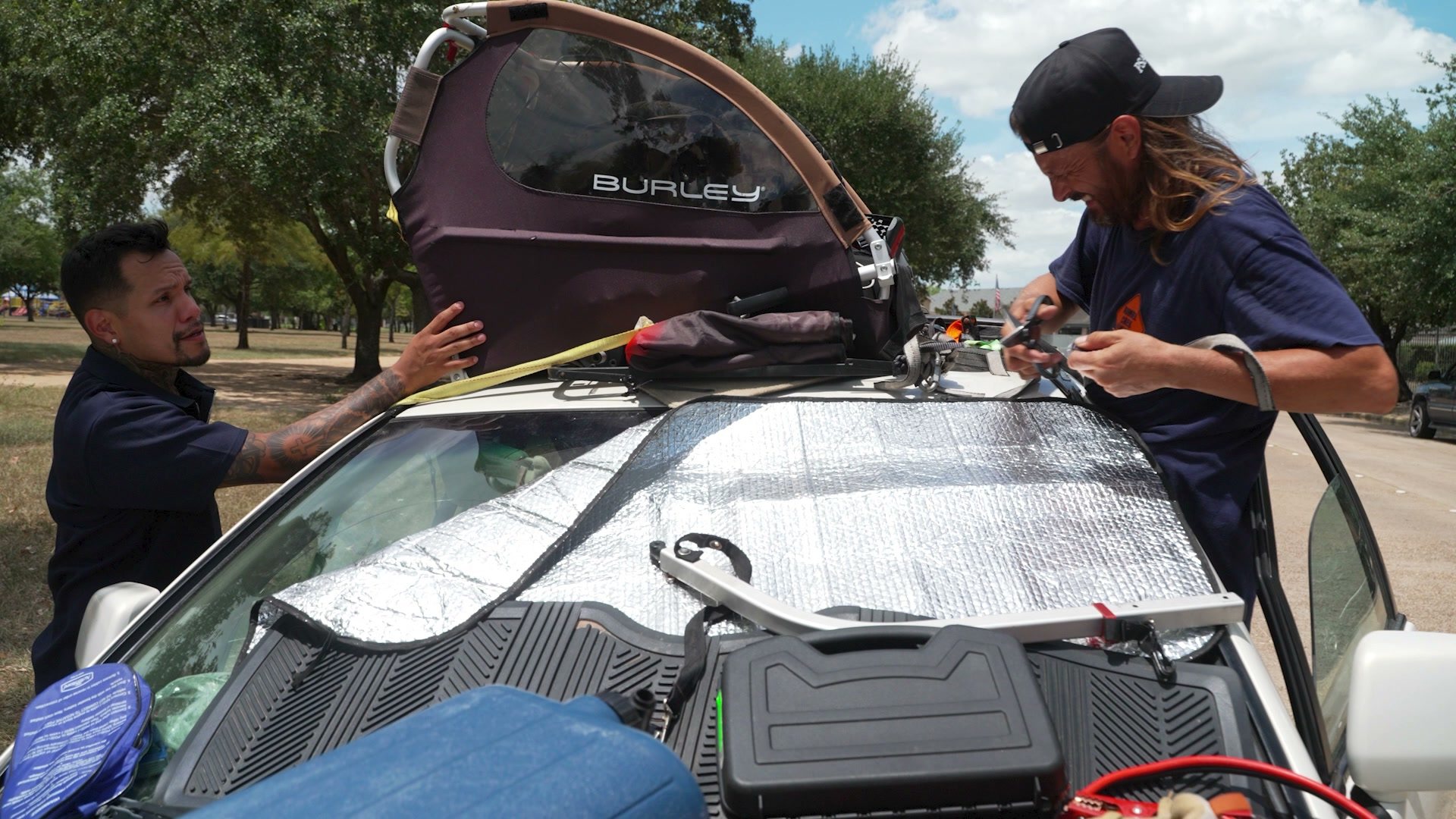
They couldn’t go far. Their car was on the verge of breaking down, and getting gas money wasn’t always possible.
Still, they were in a different spot every day. A McDonald’s parking lot, a car wash parking lot, outside of a park.
They were trying to stay away from police until they were able to move into their promised apartment. Every time we met them, we would reach out to the CFTH team, making sure everybody kept in touch.
“I expect the worst but hope for the best,” Manny said.
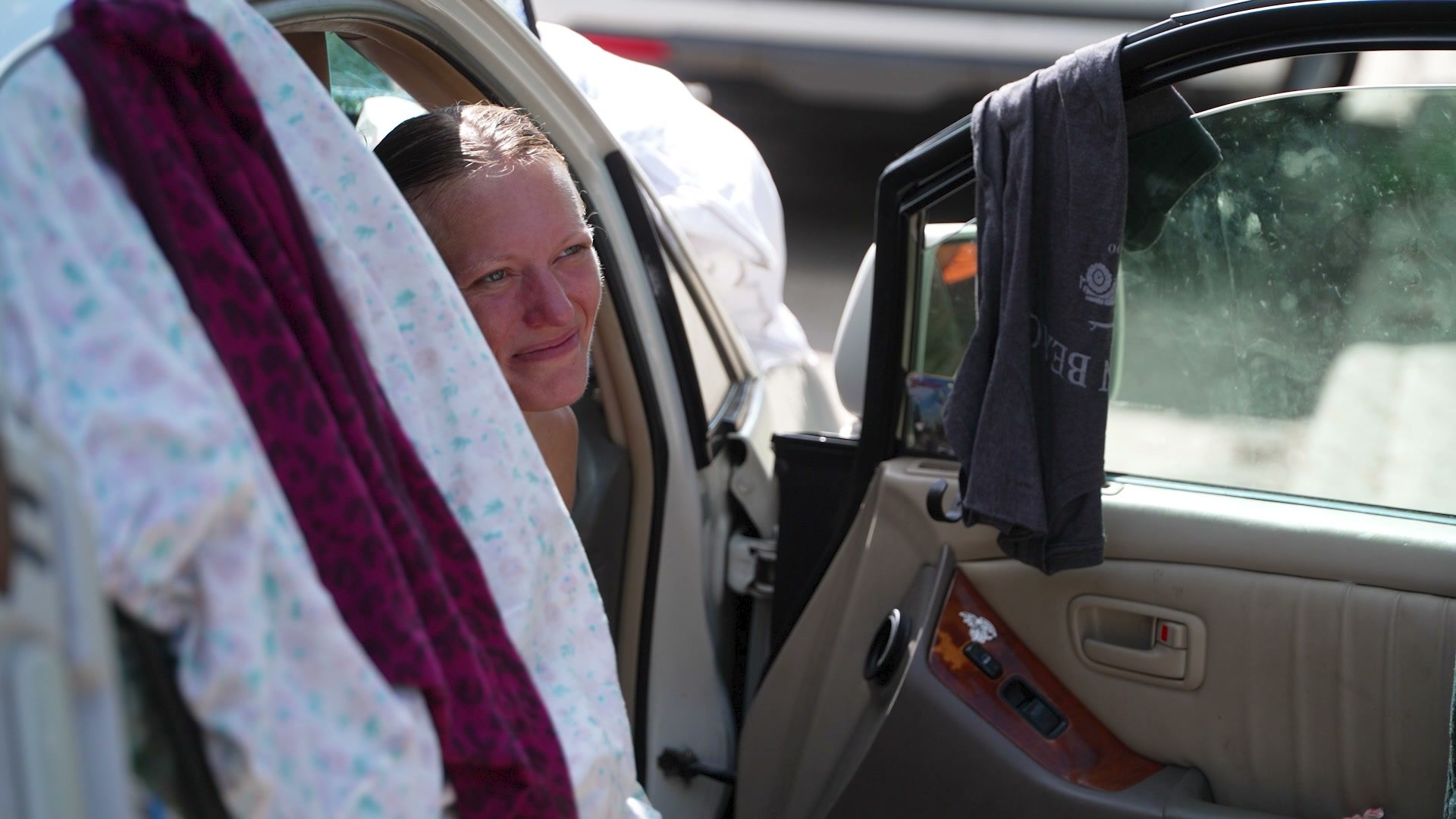
By this point, blood was oozing out of the spider bites on his leg.
He wrapped paper towels around himself and tried to sleep during the hot afternoons.
Moving day was a long, hot day.
Khena was there, and so was German Hernandez, a caseworker from The Beacon with tattoos and the same calming vibe we felt from Khena.
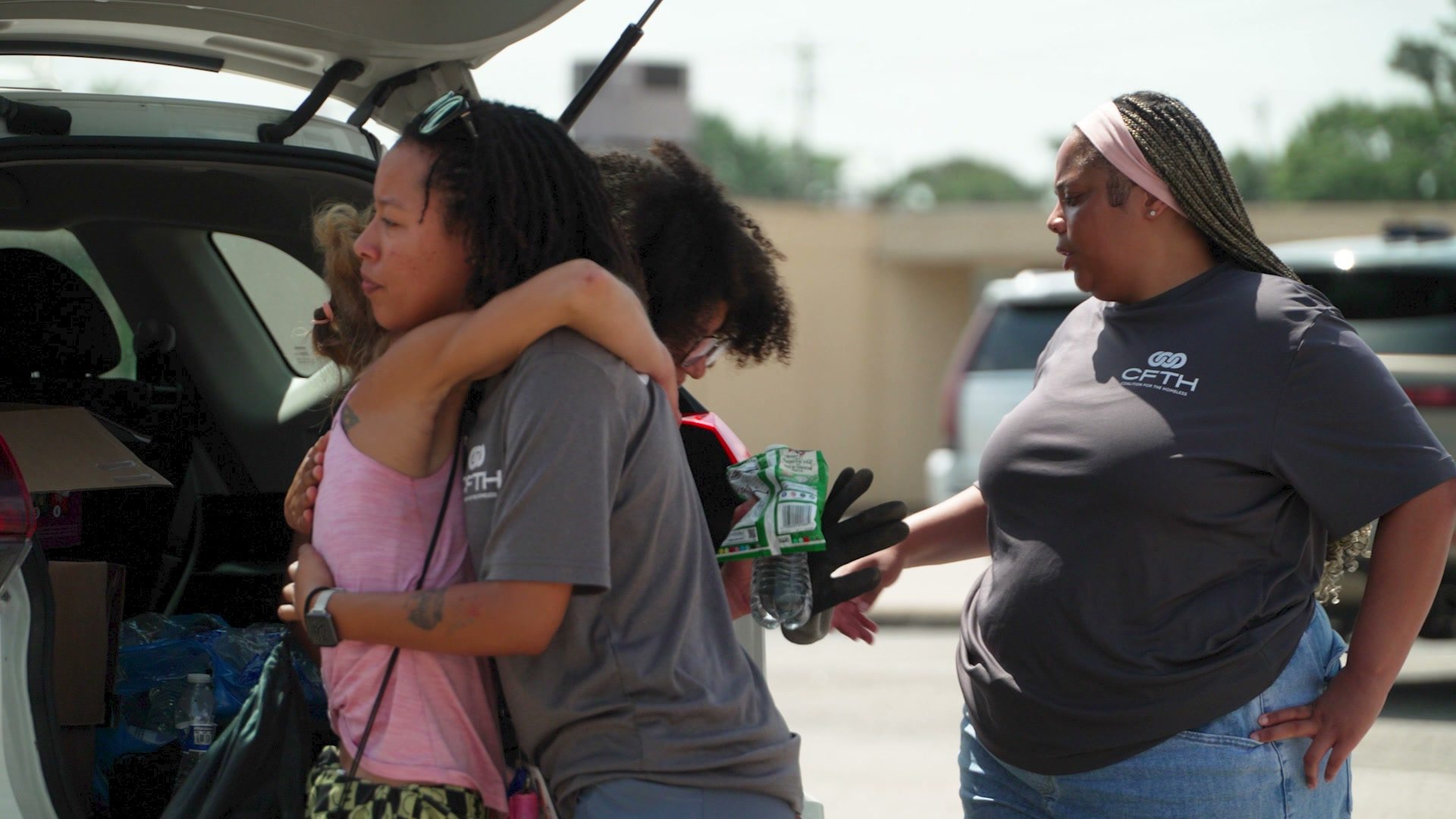
Sarah wore a black and gold party dress and red boots, both given to her by a neighbor who had been cleaning out her closet. The dress made her look younger than her age (39), and it was heartwarming to see her put on a pretty dress for what could be one of the most important days of her life.
As soon as we arrived, another neighbor who saw our camera approached us to tell us she could tell the couple wasn’t really homeless because Sarah was wearing a nice dress. She was worried Sarah and Manny were only pretending to be homeless, so she called the police.
The day felt like it would never end, filled with unexpected trips, car trouble, and exhaustion.
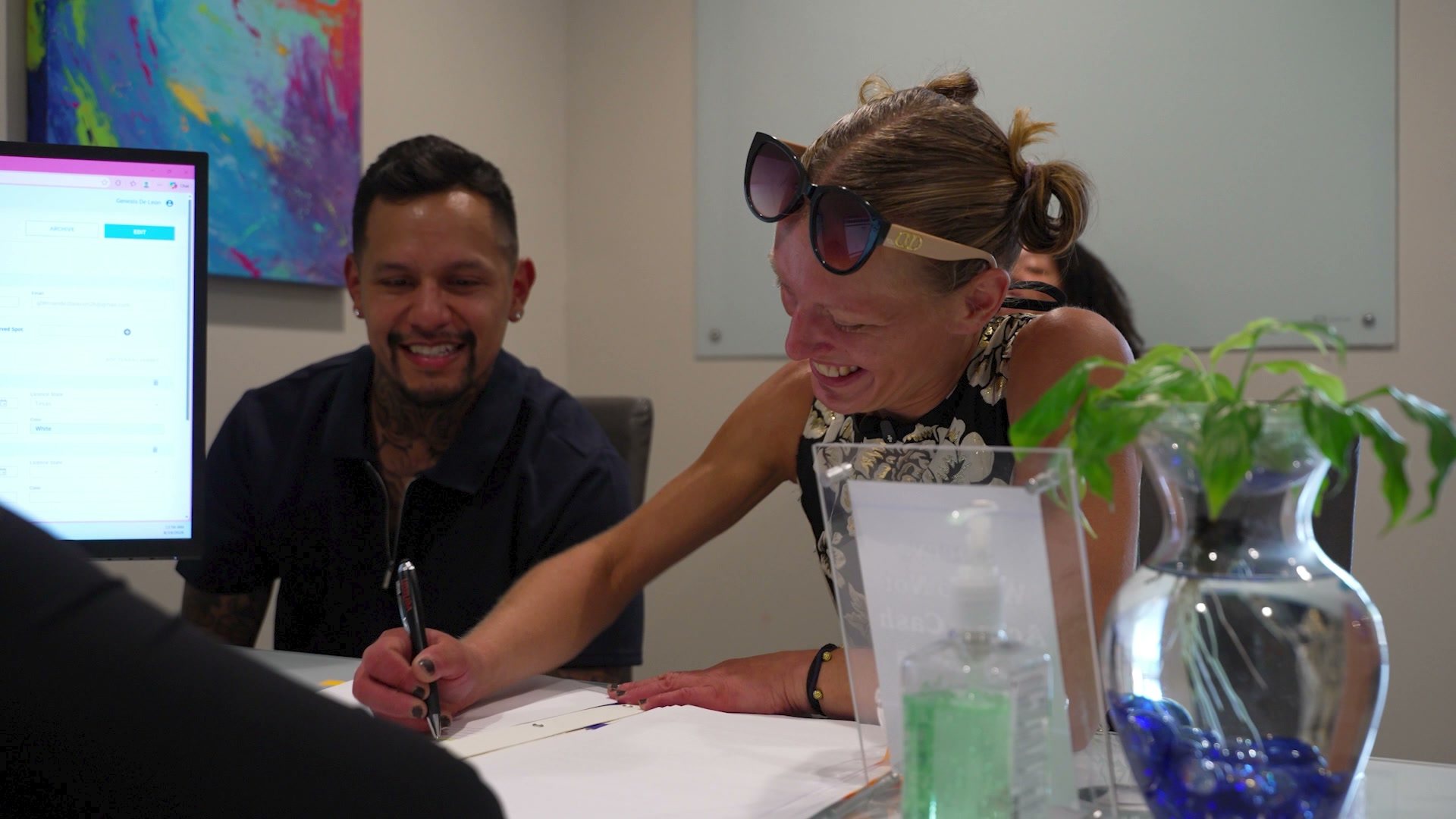
But, eventually, Sarah and Manny signed a lease for a one-bedroom apartment in northwest Houston.
Sarah was already dreaming of a bright future.
“I don’t even know how to go about approaching like, ‘I was homeless for a year.’ With the help of good people, we’re back on our feet. I don’t even know how to begin that conversation,” Sarah said, with wide eyes.
Their new apartment was empty. For at least the next few weeks, they would be sleeping on the floor. But, Manny and Sarah had air conditioning. A hot shower. Privacy.
German told them he would be back in the next few days to check on them.
He urged them to spend the next week getting acclimated to their new home. Finding work could wait until then.
“My biggest thing right now is to take some time to just kind of breathe. Mentally, physically, emotionally,” he said. “This is your home. You have a key. This is yours.”
Manny asked how he could help others struggling with homelessness.
It was a jarring question, considering his legs were covered in paper towels and he still didn’t have a job, but one that German said is common.
“There’s a human behind it. Yes, we might judge right away, but there’s a story behind everybody. And if we’re able to just listen, we might just kind of understand,” German said.
“It’s interesting. I don’t know if we know when we actually need help or not because we truly believe in our own human spirit. I want to know that I’m going to work out my own life and I’m going to figure things out and that it’ll all come to be fine. I don’t want to think things are going to go poorly, so I think our human nature is to not ask,” Kelly had told us. “Even when we’re desperate for it, we do not ask, because we assume that we should be able to take care of it.”
“It feels like responsibility again, getting back to it,” Sarah said, putting her hand to the door of her new home. “It feels good. A place that’s ours.”
Days after Sarah and Manny got their apartment, I got a call from Gary.
It turns out, he had fainted in the heat and was taken to the hospital in an ambulance.
After spending a couple of days in the hospital, he walked ten miles to get back to his truck, but when he got there, it wouldn’t start.
So, he spent the day outside and fainted again.
After another hospital stay, Gary moved into a friend’s house temporarily.
His phone had been turned off due to non-payment, and he had lost his driver’s license and social security card.
After a few weeks, he was able to collect enough money to turn his phone back on, and he called us.
“I’ve been homeless and hungry. I’ve been struggling to exist. It’s very hard out here,” he told us.
Without valid documentation, Gary wasn’t able to access the Social Security payments he had been getting. He had no income at all.
“I’m just going to jump off a bridge. I’ve had it. It’s that bad,” he said.
It was heartbreaking. We hated seeing this kind, joyful man in so much pain.
So, we called Khena, unsure of what she could do to help.
A few days later, they met and exchanged information.
It turned out, Gary’s fix was simple.
He didn’t know he could take photos with his phone. And he didn’t know how to fill out paperwork online.
Khena helped him take a photo of himself and turn in necessary documentation. Within a couple of weeks, Gary had access to his Social Security funds.
Khena worked with advocates from the Salvation Army to help Gary find an affordable apartment, and Gary signed a lease.
Watching him show us around his new place was an experience I won’t forget soon.
For the first time in months, he shaved his beard and cut his hair.
As he showed us his new driver’s license and social security card, Gary said, “I was about to jump. I said, ‘That’s it.’ I looked down and said, ‘Too easy.’ I thought, ‘There’s more life to live.’”
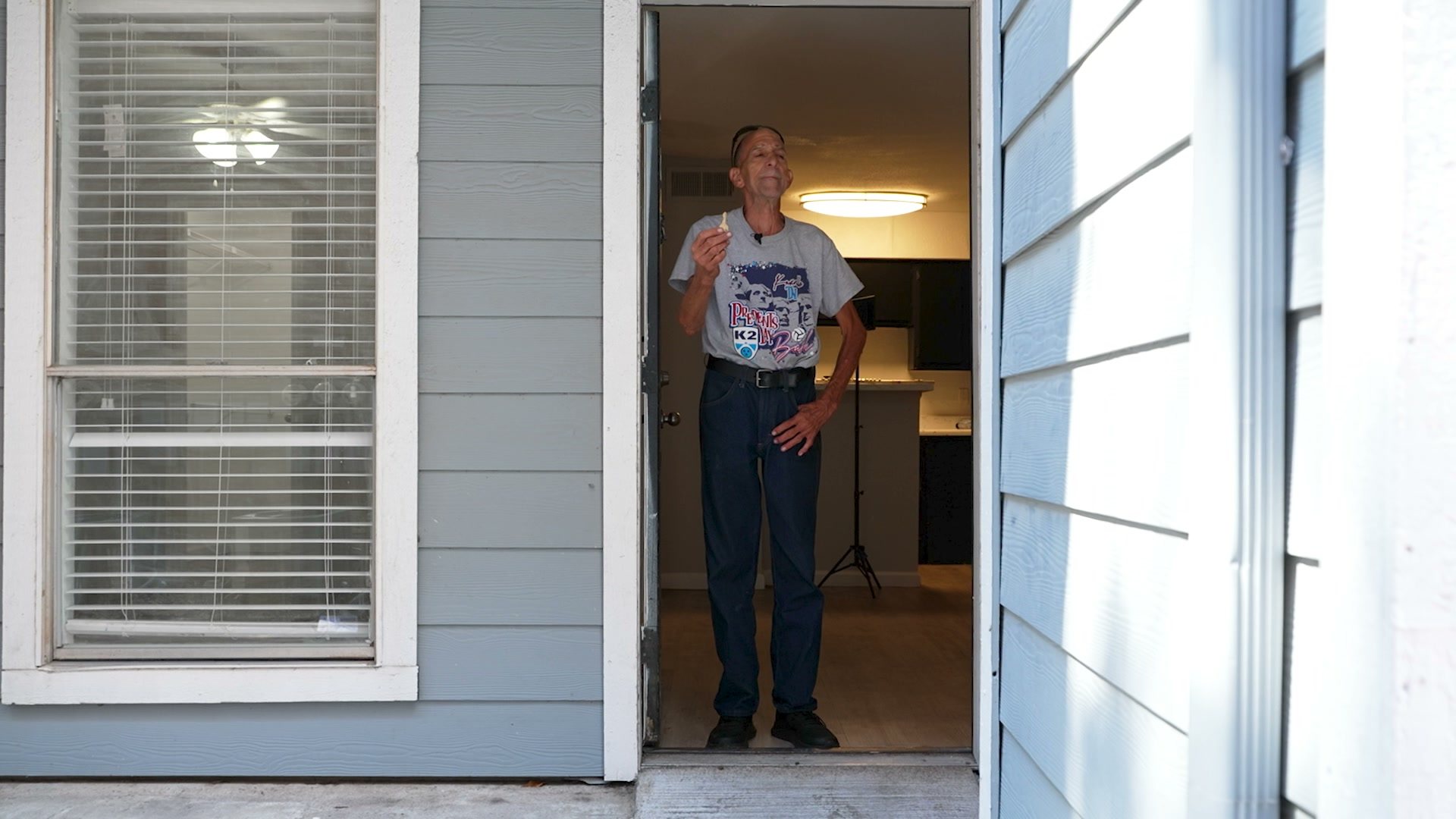
There’s more life to live.
Gary
Left an abusive boyfriend. Lived behind a grocery store for two years.
Lost touchSelling everything to afford an apartment. Said no to the camera.
Gone the next day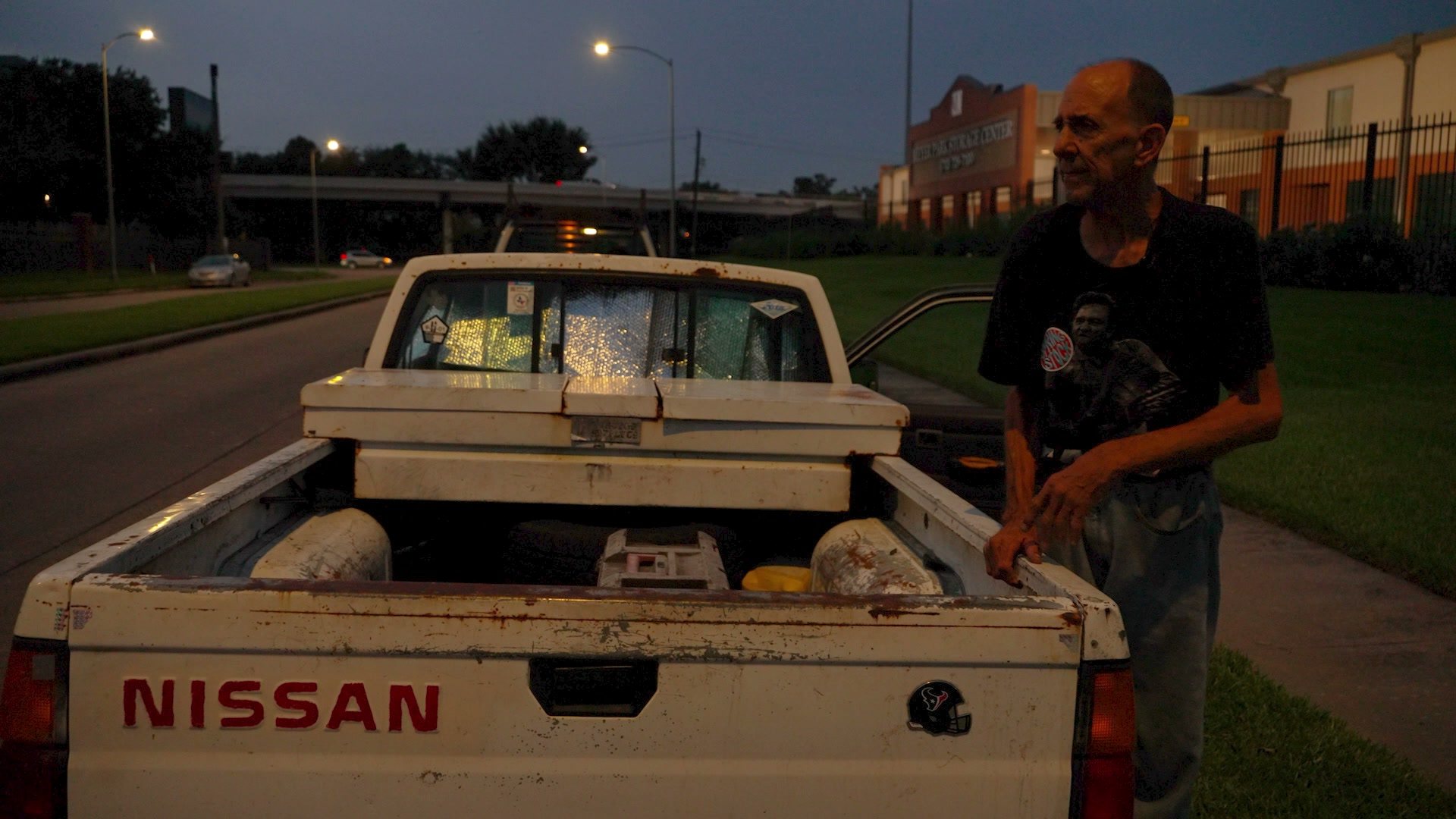
Lost his home when his mother died. Signed a yearlong lease.
HousedA year in the car. Now in a one-bedroom in northwest Houston.
HousedWe don’t know what will happen next for Gary, Nechol, Sarah, or Manny.
After spending weeks with her, we lost touch with Nechol. Her phone has been shut off, and we haven’t seen her at the grocery store where she had been living for two years.
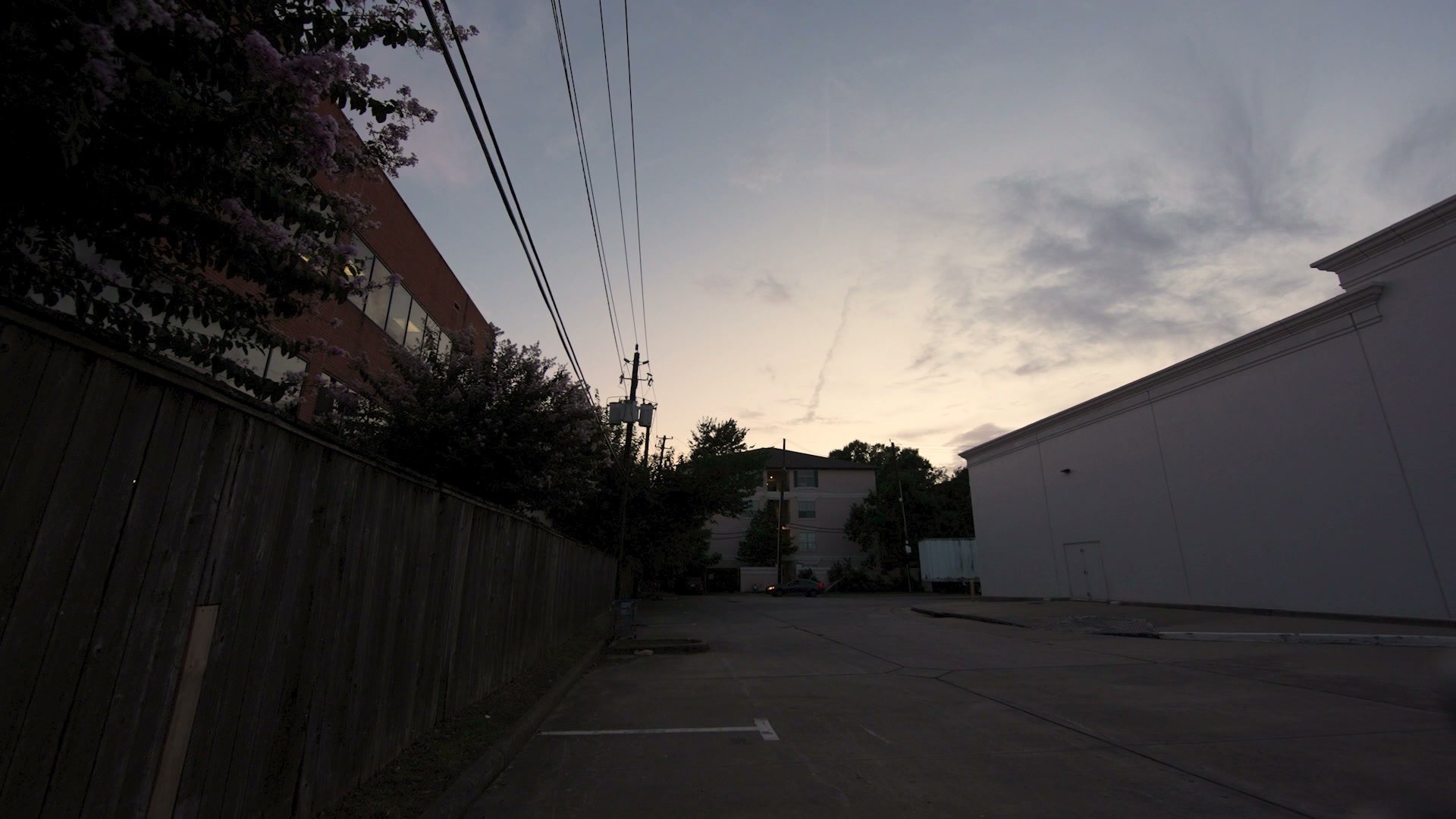
Even Sarah and Manny, who are in a regimented program, will face challenges.
Statistics from CFTH show about 85% of people who are placed in yearlong rent assistance programs remain stably housed after the program ends.
15% of them return to homelessness.
We don’t know if everybody we met while working this story will end up okay, but meeting them showed us why their stories matter, and how that precipice they live on can change in an instant.
I’ll end this story the same way we ended our thirty-minute documentary, with a quote from Gary.
I’m overwhelmed by the possibility of being alive.
Gary
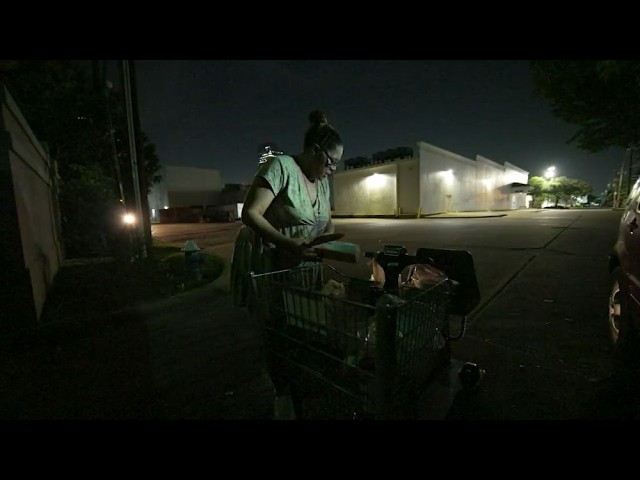 Play the video: Watch the full documentary